The Bristol storage-yard answer before you buy

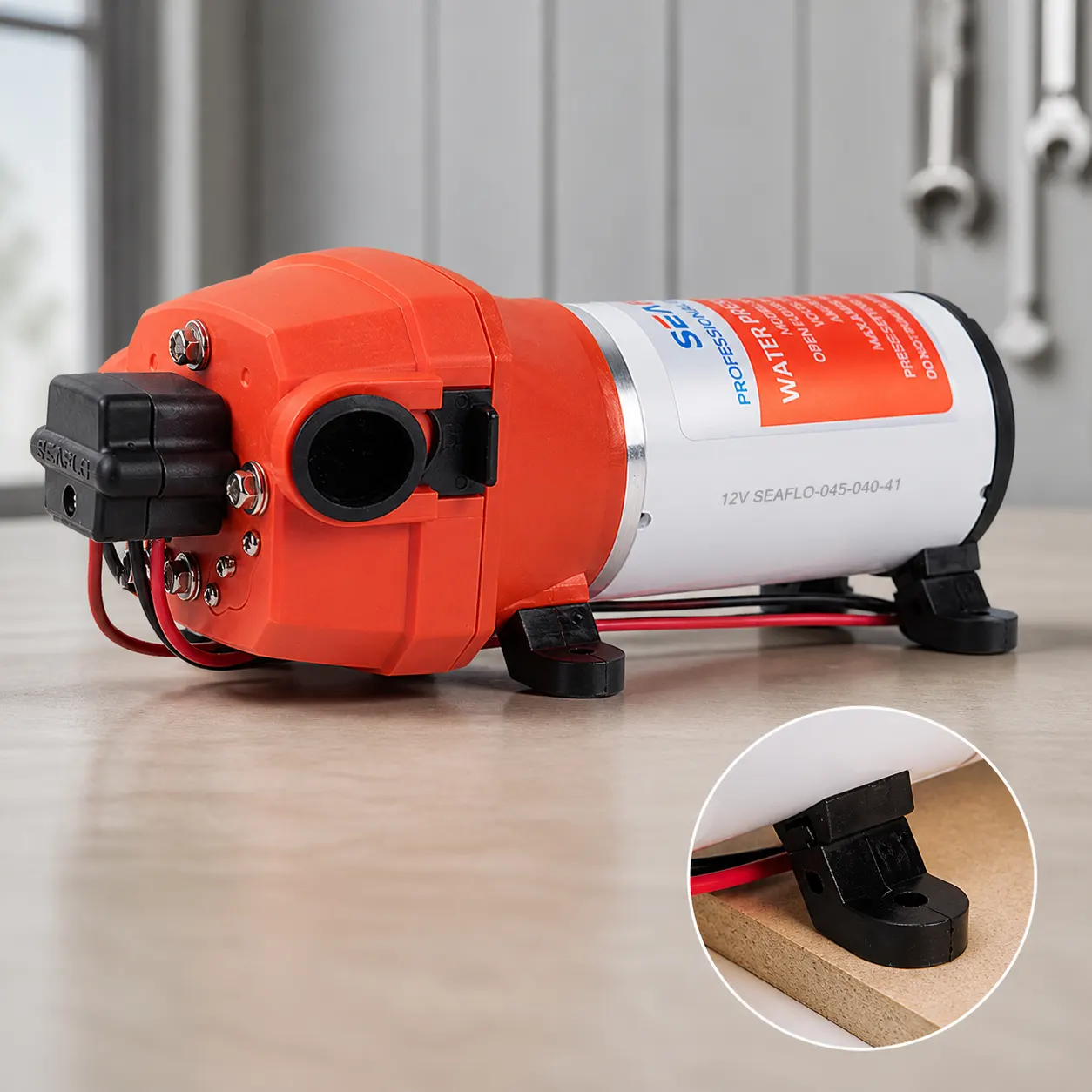
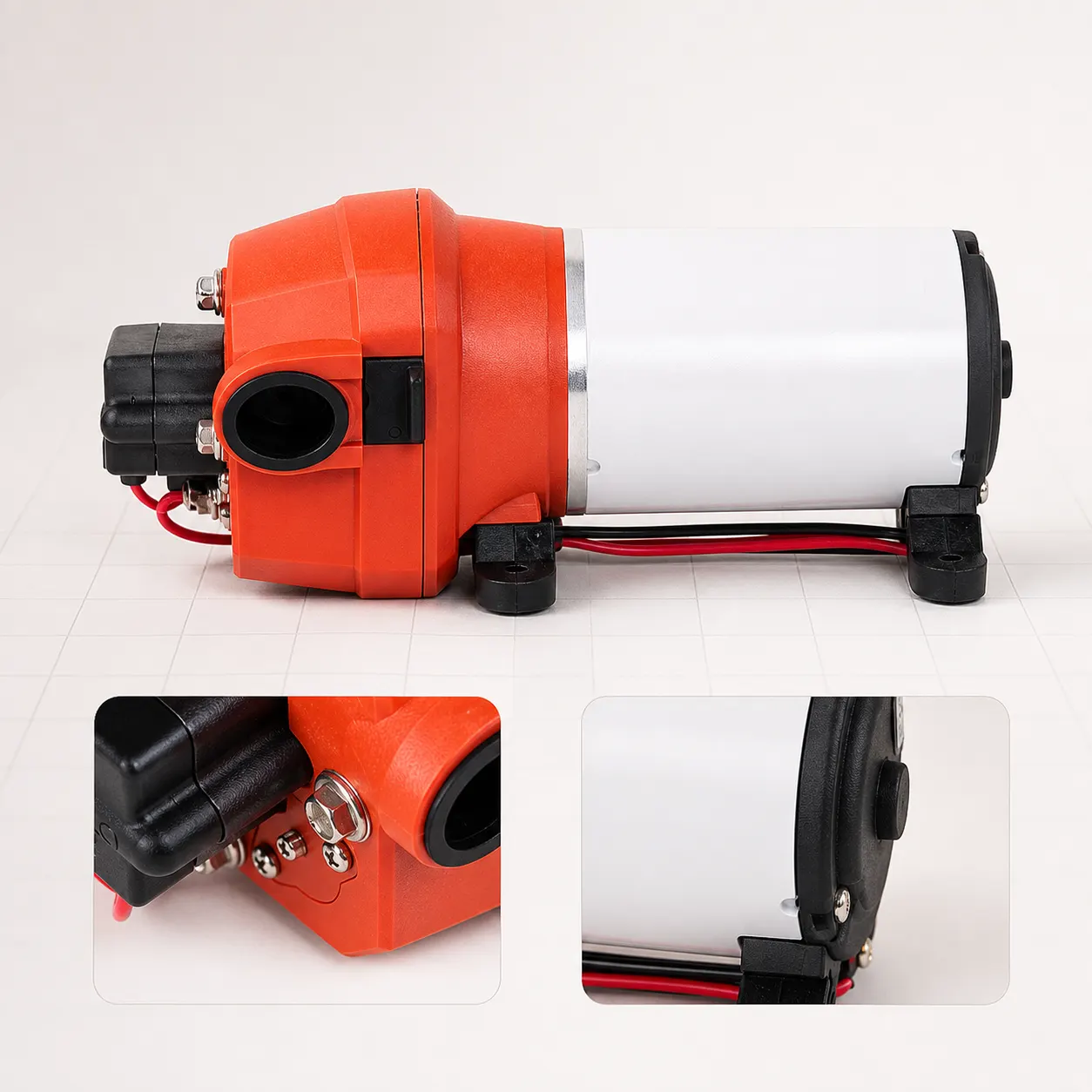
12V Diaphragm Pump detail view

If you are looking for a caravan diaphragm pump 12v self priming, start by confirming three things: your system is genuinely 12V DC, you need a compact diaphragm pump rather than a bilge, fuel or mains pump, and your existing pipework and fittings can be matched without forcing the installation. The SEAFLO 12V Diaphragm Pump, 045-040-41, is documented as a compact, self-priming pump family product for RV, boat and sprayer applications, so it belongs in the right category for many leisure-vehicle water-transfer discussions. It is still not a magic fix for every weak tap or noisy pump symptom.

At a caravan storage yard outside Bristol, the practical job is usually simple: get enough confidence before dismantling the water locker or towing away for the weekend. A self-priming diaphragm pump can be relevant when the pump has to draw water through a layout rather than sit permanently flooded, but priming still depends on the whole setup. Air leaks, blocked strainers, tired hose connections, reversed polarity, poor wiring and an empty or awkwardly positioned tank can all make a good pump look faulty. Treat the pump as one part of the system, not the whole diagnosis.

The UK touring job this pump category is trying to solve

For a UK caravan owner, the water pump is not an abstract accessory. It decides whether washing up after tea, rinsing muddy boots, filling a kettle and using a basic washroom setup feel straightforward or awkward. The common moment is not a showroom comparison; it is a pre-trip check on a cold driveway, a pump that runs but does not deliver useful water, or a tap flow that has dropped to a weak pulse. That is why the first decision is category fit: a compact 12V diaphragm pump for a compatible leisure-vehicle water-transfer setup, not an unrelated pump type with the wrong duty.

The documented facts for the SEAFLO 045-040-41 keep the scope quite narrow, which is useful. It is identified as a 12V configuration, a compact diaphragm pump, and a self-priming pump family product. The listed title also connects it with RV, boat and sprayer use. Those facts support considering it for a caravan or motorhome water-transfer project where 12V power is already part of the system. They do not, on their own, prove drinking-water suitability, exact pressure, flow rate, hose diameter, noise level, fuse rating, connector type or compatibility with your particular taps. Those are checks you still need to make before fitting.

The documented facts worth checking against your own van

Use the product facts as a boundary, not as a full installation manual. The firm facts are that this is the SEAFLO 12V Diaphragm Pump, 045-040-41, in a locked 12V configuration, described as compact and self-priming, with listed applications across RV, boat and sprayer contexts. That gives you a sensible starting point if your caravan already uses a 12V leisure battery system and you are replacing or adding a compact pump. It also helps you avoid a category error, such as buying a bilge pump because it says 12V, or choosing a household mains pump because it looks powerful.

The missing facts matter just as much. The frozen product information does not provide a confirmed hose size, included fittings, pressure rating, flow rating, fuse requirement, potable-water certification, mounting orientation or kit contents. That means the buyer’s work is to compare the pump listing with the old pump, the water tank position, the pipe run, the switch arrangement and the space around the mounting point. If your existing installation uses a branded plug-in assembly, a submersible pump dropped into an external container, or a specific pressure-switch setup, do not assume a compact diaphragm pump is a direct swap just because both are used in caravans.

The priming check when the motor runs but taps stay weak

Self-priming is often the phrase that attracts buyers, but the useful question is more precise: can the pump draw from your tank position through airtight suction-side plumbing in the way your caravan is laid out? In the Bristol storage-yard scenario, fill the fresh-water container or tank, open a tap, check that the inlet side is not drawing air, and look for cracked hoses, loose clips or poorly seated connectors. A small suction leak can stop water delivery even when the pump motor sounds healthy. Replacing the pump without checking that leak may leave you with the same problem after spending money.

Also separate electrical symptoms from water symptoms. A 12V pump needs the correct polarity and a sound supply from the leisure battery or relevant circuit. If the motor does not run, or runs weakly, the issue may be a fuse, switch, connector or wiring problem rather than the pump head. If the motor runs strongly but no water moves, think about air locks, blocked inlet strainers, kinked hoses, empty tanks and valves before deciding the diaphragm pump has failed. A self-priming pump is helpful only when the rest of the route allows it to prime.

A packing-bench checklist before dismantling the old pump

Set up a small packing bench beside the caravan rather than working from memory. Put the old pump details, hose ends, clips, wiring connectors and a phone photo of the current installation in one place. Then check the replacement candidate against the visible facts. Confirm that the job is for a 12V DC caravan or leisure-vehicle water setup. Confirm that a compact diaphragm pump is the category you need. Confirm that the layout benefits from a self-priming pump rather than requiring a different pump arrangement. Confirm that the pump is being considered for water-transfer use, not fuel movement, automatic bilge duty or a mains-pressure household system.

Then work through the practical fit checks in order: power source, polarity, fuse or circuit protection, mounting space, hose route, suction-side airtightness, outlet route, access for future inspection, and any strainer already in the system. Check whether your present installation uses special connectors or a complete pump assembly. Check whether the tap behaviour suggests a blockage, air leak or wiring issue rather than pump failure. Check whether the listing confirms the details you need; where it does not, treat that as a question to resolve before purchase. This sequence keeps the decision grounded in your caravan, not in a generic pump description.

The mismatch cases where this is probably the wrong route

Do not buy a compact 12V diaphragm pump simply because the caravan has poor water flow. If your system uses a drop-in submersible pump and matching external water container arrangement, you may need a like-for-like category rather than a diaphragm pump. If your problem is rapid cycling, pulsing or intermittent flow, the cause may sit elsewhere in the system, such as a leak, switch behaviour, blocked filter or an accumulator-related issue where one is fitted. If you cannot identify your voltage, hose route or existing pump type, the risk of buying the wrong part rises sharply.

There are also use cases the documented facts do not support. The supplied product facts do not establish fuel compatibility, chemical resistance, medical or certified drinking-water outcomes, automatic bilge-pump operation, or suitability for every sprayer liquid. The title mentions sprayer applications, but that does not prove compatibility with any particular additive, chemical residue or nozzle arrangement. For a caravan buyer, the main limit is simpler: if your installation needs confirmed pressure, flow, fitting size or potable-water certification, those details must be verified from the product page or seller information before you treat this pump as suitable.

A simple comparison for caravan, boat and sprayer buyers

The same 12V compact diaphragm pump category can appear in different buying contexts, but the checks change with the workplace. In a caravan at a Bristol storage yard, the priority is matching the existing leisure battery system, pipework, mounting point and tap behaviour. On a canal boat, the owner may be thinking about freshwater transfer, washdown, accumulator behaviour, check valves and longer pipe runs. At an allotment or smallholding, the user may be thinking about a sprayer tank, hose length, nozzle pattern and battery source. The documented title allows these contexts to be considered, but it does not erase the need for setup-specific checks.

A practical side-by-side decision looks like this in plain English. For a caravan, check 12V DC supply, pump category, hose fit, water-tank position, priming route and whether poor flow is actually caused by an air leak. For a small boat, check the same voltage and hose basics, then look harder at access, strainers, cycling behaviour and the wider water system. For a sprayer or bowser setup, check tank position, suction hose, nozzle demand, rinsing routine and whether the liquid is explicitly supported. In all three settings, the common rule is the same: the pump can only be judged against the system around it.

The grounded next step before ordering or fitting

Your next step is to collect the facts from your current installation, not to guess from the failed symptom. Photograph the existing pump label, wiring, hose connections, mounting position and water route. Measure only what you can verify and note anything you cannot identify. Then compare those notes with the SEAFLO 12V Diaphragm Pump, 045-040-41 listing: 12V configuration, compact diaphragm pump form, self-priming pump family, and stated RV, boat and sprayer application language. Where the listing is silent, treat that silence as a check to resolve rather than a detail to assume.

If the voltage, category and physical setup all line up, a compact self-priming 12V diaphragm pump may be a sensible candidate for a caravan water-transfer repair or project. If several details remain unknown, slow down and identify the old system first. The cheapest mistake to avoid is buying the right-looking pump for the wrong type of installation. At the Bristol storage yard, the best outcome is not simply a new part in a box; it is a pump choice that matches the leisure battery, the pipe run, the tank position and the way you actually use water on tour.