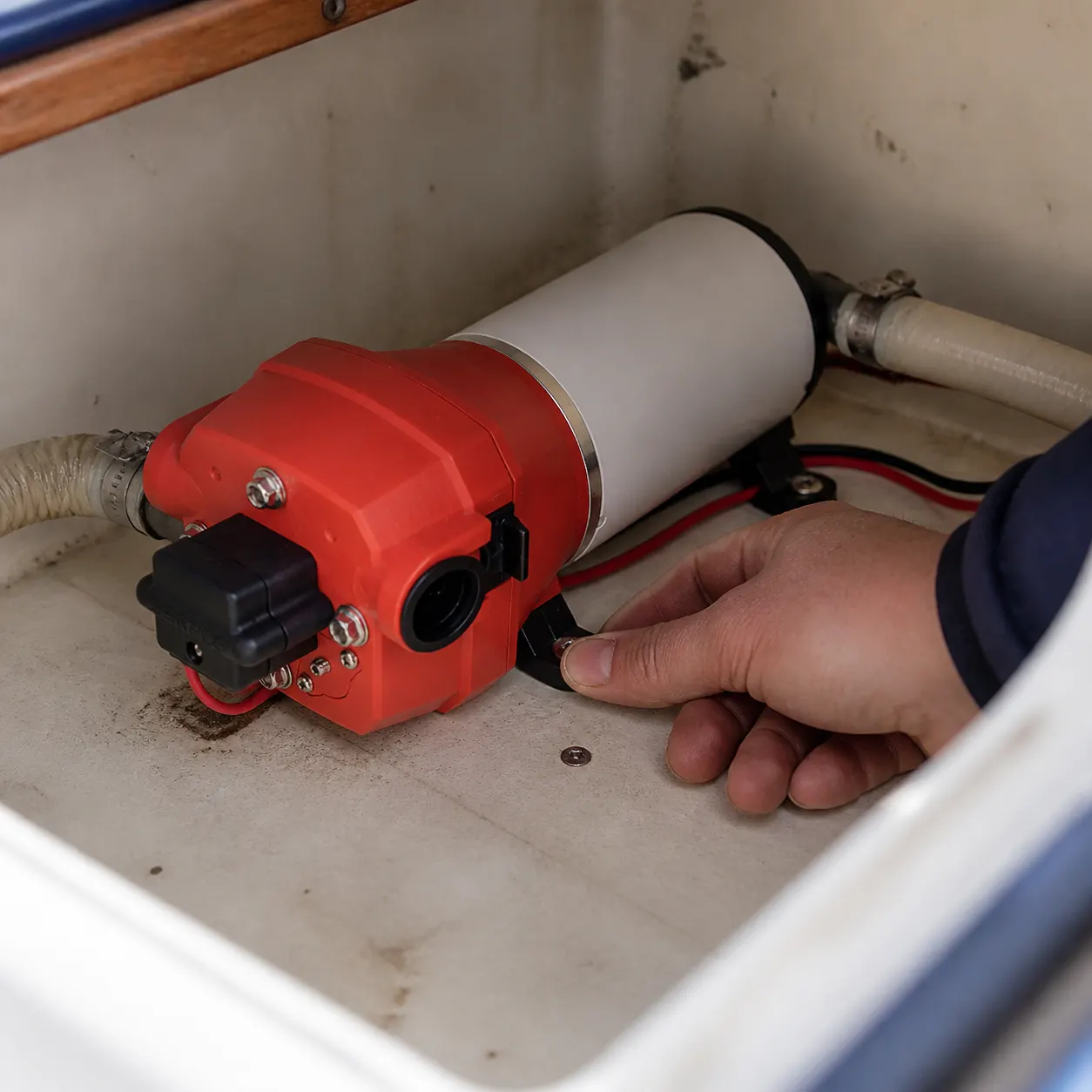
Short answer: When a motorhome 12V water pump is not priming, buying another pump is not the first proof that the old one has failed. Check the 12V supply, polarity, water source, inlet hose, clips, strainer and possible air leaks before dismantling the installation. The Seaflowate product page identifies the SEAFLO 045-040-41 as a compact self-priming diaphragm pump for RV, boat and sprayer applications. SEAFLO's matching model data lists 4.5 GPM, 40 PSI and 12.13 A maximum current, but those figures do not confirm that the model fits your motorhome's fittings or circuit.
Separate a priming fault from pump failure
A motorhome pump that does not prime presents two different questions: does the motor run, and can water reach the pump through a usable inlet path? A silent motor points attention towards supply, fuse, switch, polarity or connector checks. A running motor with no delivery points attention towards the tank, hose route, air entry, blockage or the pump itself.
This distinction matters to a buyer because the same symptom can lead to two very different purchases. If the inlet hose is drawing air, a new pump may repeat the old behaviour. If the motor and wiring are sound but the pump is genuinely the failed component, a like-for-like model comparison becomes more reasonable.
Anchor the replacement to published facts
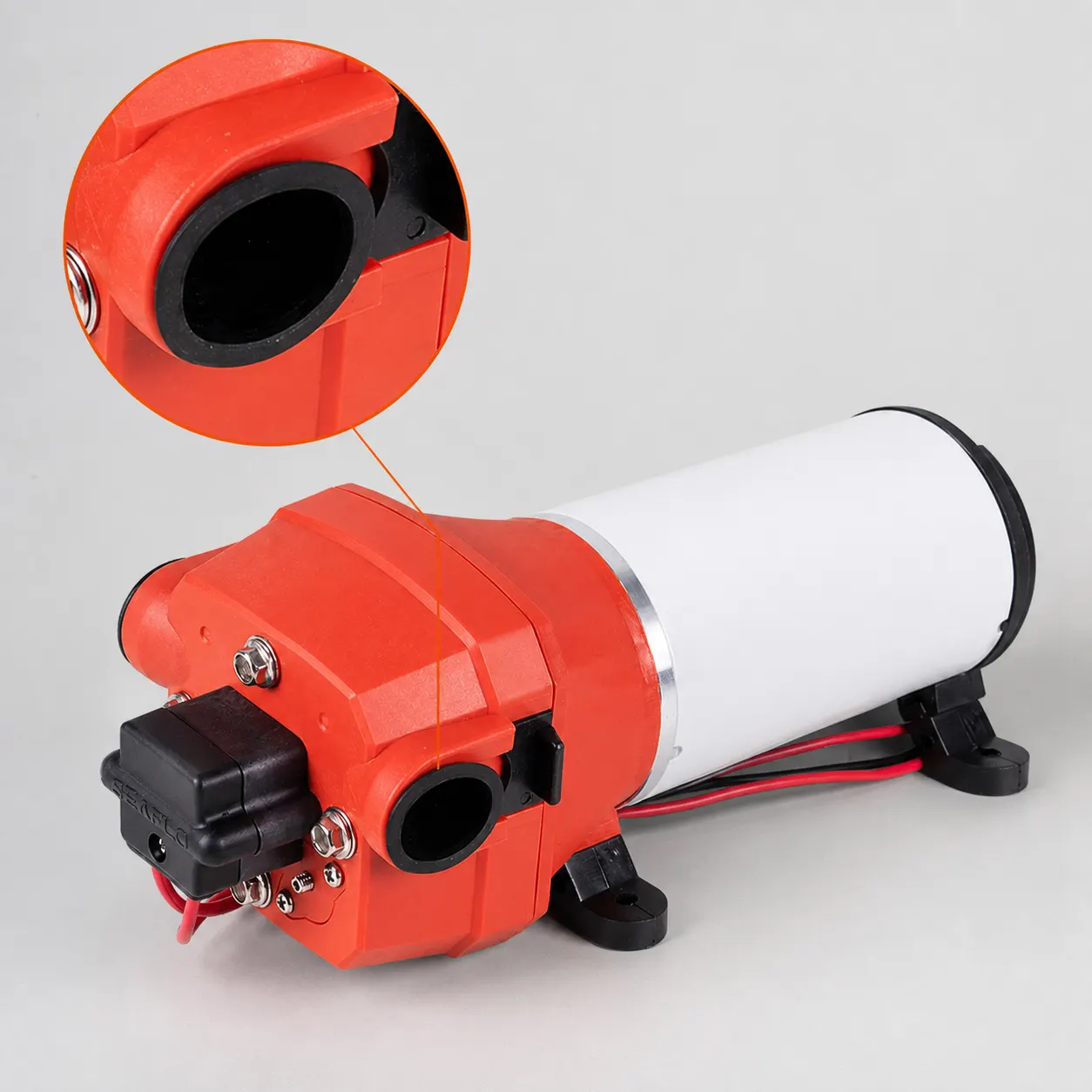
The current product page identifies the SEAFLO 12V Diaphragm Pump, 045-040-41 as compact, self-priming and listed for RV, boat and sprayer applications. The manufacturer page for SFDP1-045-040-41 lists a 12V pump with 4.5 GPM flow, 40 PSI pressure, 12.13 A maximum current, self-priming, run-dry capability and quick-connect fittings.
Use those facts as a screening boundary. They can tell you whether the broad category is worth investigating, but they cannot tell you whether the replacement will line up with a particular motorhome's hose ends, mounting holes, control arrangement or electrical protection.
| Known from the documents | Still to verify on the motorhome |
|---|---|
| 12V diaphragm-pump configuration | Existing circuit, polarity, protection and connector |
| 4.5 GPM and 40 PSI manufacturer data | Whether the motorhome system is designed for those published values |
| Self-priming and run-dry model claims | Tank level, sealed inlet, hose condition and priming path |
| Quick-connect fittings are listed | Exact fitting size, adapters and compatibility with the old hoses |
Run the bench checks in order
Keep the investigation controlled. Do not remove the old pump until the surrounding evidence has been recorded and the replacement questions are written down.
- Confirm the tank or container has water and that the pickup can reach it.
- Check the 12V supply, polarity, fuse, switch and connector path before treating a silent pump as a mechanical failure.
- Inspect the suction hose, clips, strainer and bends for blockage or air entry when the motor runs without delivery.
- Compare the existing pump's mounting position and hose ends with the published replacement information.
- Record every unanswered specification and ask for confirmation before placing the order.
Know when to stop the replacement plan
Manufacturer does not specify your exact motorhome compatibility, hose dimensions, mounting clearances for your layout, included wiring parts, service life, noise, or the condition of your existing circuit. The documents also do not establish that every motorhome water system or intended drinking-water use is certified for this model. Those are not details to fill from a similar pump listing.
If the pump is connected to a system you cannot safely identify, or if the symptom could be a damaged hose, blocked line or electrical fault, pause the purchase and obtain competent help. A documented replacement candidate is useful only after the fault and the installation boundary are clear.
Related guides and product details
Diagnose the motorhome's water and 12V paths first, then compare the SEAFLO 045-040-41 against the evidence you can actually see. Read 12V Caravan Water Pump Replacement: What to Match First for related guidance. Read Caravan Diaphragm Pump 12V Self-Priming: What It Solves for related guidance. Review the documented specification on the SEAFLO 12V Diaphragm Pump, 045-040-41 product page before ordering.
Sources and safety context
- Supports the product identity, compact 12V diaphragm-pump description, self-priming wording and listed RV application Current Seaflowate product page.
- Supports the matching model's published flow, pressure, current, self-priming, run-dry and quick-connect information SEAFLO 41-Series diaphragm pump specifications.